Admiration without idealization.
Critique without dismissal.
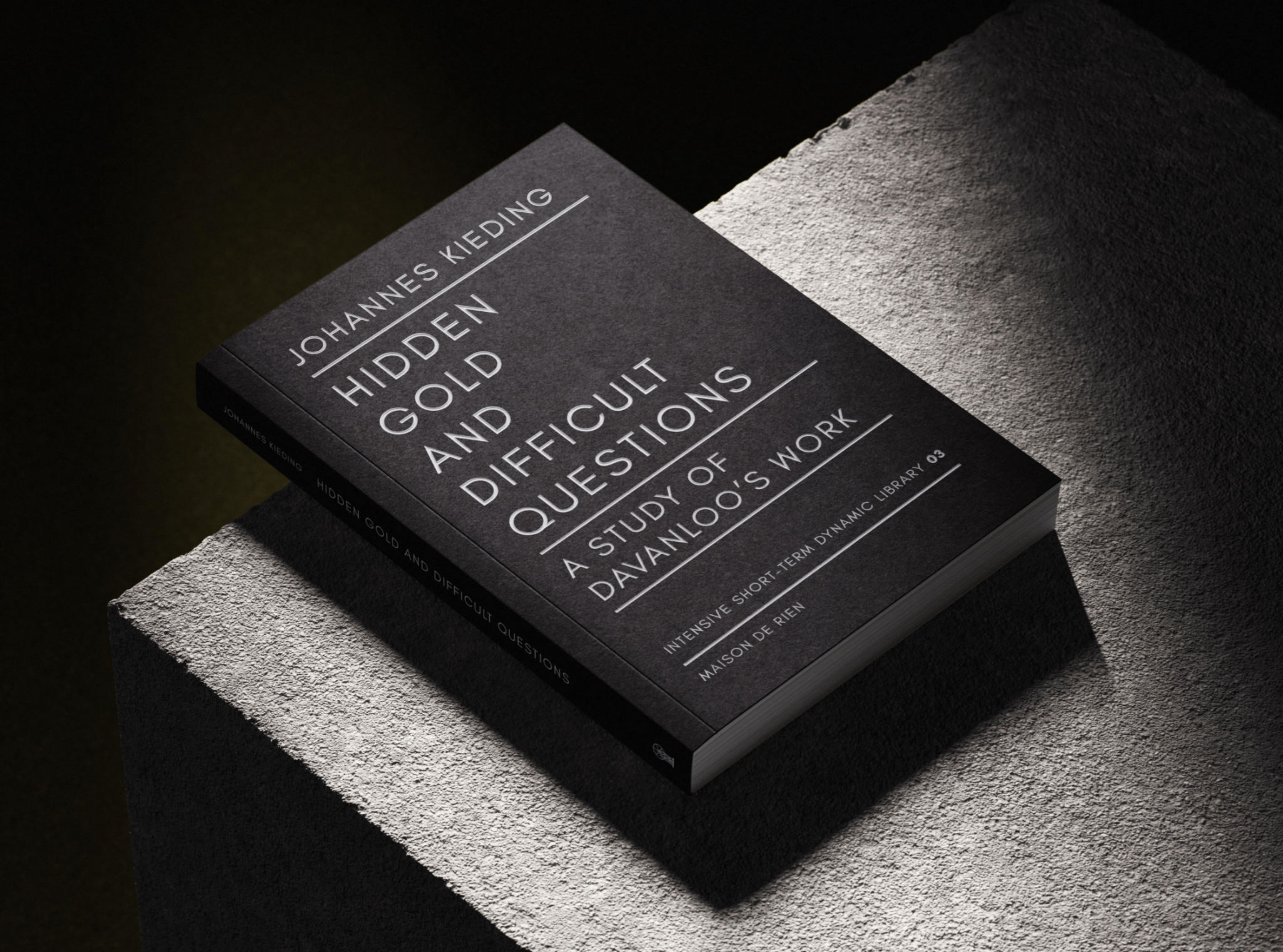
I’m proud—and so excited—to share Hidden Gold and Difficult Questions: A Study of Davanloo’s Work.
At its heart, this book offers my own close, interpretive reading of Davanloo’s work: what I find most valuable and enduring, alongside aspects I believe warrant criticism. The transcripts also become a point of departure for my own ideas and perspectives—developed from, alongside, and sometimes in tension with his work.
I am especially interested in Davanloo’s sustained effort to understand the patient. A request for greater specificity can do more than clarify a problem. It can communicate intense interest, awaken the patient’s own curiosity, and begin to make an experience accessible to both people in the room.
These encounters also raise difficult questions. When does the therapist’s persistence help a patient find their own voice, and when might it make it harder to stay connected to what they actually feel, think, and want? How can vigorous involvement deepen emotional contact without taking over? What happens when the patient’s response challenges the therapist’s understanding—or suggests that a different approach is needed?
The transcripts give these questions their substance. They let us follow an exchange closely, notice a shift, and reconsider what an intervention appears to accomplish. Throughout, I try to distinguish what the published material shows from my own interpretations and ideas.
My hope is that readers will come away with a richer appreciation of Davanloo’s contributions and greater freedom to think for themselves about how to use them. At the center of the book is a concern that extends beyond any one therapeutic school: how to participate fully in another person’s effort to change while leaving room for that person to surprise us, correct us, and discover a direction of their own.
Davanloo emerges from these pages as a clinician whose remarkable gifts sometimes carry risks of their own. The determination that helps him reach a patient can also make it difficult to wait. His confidence can open a path or leave too little room for another understanding. Yet he can also listen, revise, and allow himself to be led. I want to keep these tensions visible, because they are part of what makes his work worth studying closely. From my perspective, to carry forward what is most valuable in Davanloo’s work is to remain intensely interested in the patient, including when what we discover asks us to reconsider what we thought we knew.
The Making of the BookWhat early readers found
“Many books on ISTDP revisit familiar ground. This one does not. Johannes Kieding returns to Davanloo's own words and uses them as pointers toward the essence of the method, organized around three dimensions: clarity, connection, and autonomy. The result is a genuinely new contribution. Few other texts on ISTDP speak so clearly about the paradoxes at the heart of the work. It will deepen the practice of experienced clinicians and could well become a foundation for teaching ISTDP.”
Robert Johansson, Professor of Clinical Psychology, Stockholm University; Certified ISTDP Therapist and Teacher
“Johannes Kieding writes beautifully, with clarity and nuance, bringing color and humanity to the spirit behind Davanloo’s technical work. His concept of inquiry-pressure captures how genuine curiosity can itself be a meaningful therapeutic intervention. Its conversational quality is especially valuable: the therapist can remain technically thoughtful while relating naturally, strengthening the therapeutic alliance through an engaged effort to understand the patient’s experience. The passages I shared with my training group were clarifying and sparked passionate discussion. His perspective makes a real contribution by putting into words something that is often difficult to convey.”
Steven S. Shapiro, Ph.D.
“Dr. Habib Davanloo's importance as the originator of ISTDP is undisputed. Over time, however, he has become an object of idolatry for some and, for others, a caricature of a dogmatic and harsh clinician. Johannes Kieding brings his own creative framework for what lies at the heart of ISTDP to a careful, discerning analysis of Davanloo's most famous cases. Through that lens, he neither defends nor prosecutes Davanloo, and instead allows him to emerge as a real person: a genius who opened a new way of understanding and relating to patients, and a human being with flaws of his own. This book is an invaluable companion to Davanloo's primary writings, both for newcomers to ISTDP who want a guide as they learn from its originator and for experienced clinicians who have never read him directly or are ready to see him with fresh eyes.”
Hee-Sang Harrison Lyu, MD
“Going through the Davanloo transcripts with you as a guide is significantly more meaningful than my efforts to read and understand him on my own.”
“I experience the book as an invitation to deepen my own critical thinking faculties, rather than an attempt to instruct me as to what to think and what to do.”
Trevor Brown, LPC
Read Trevor’s full response to the book
A fuller response from Trevor Brown, LPC
Hi Johannes!
HUGE congratulations on sending the book out to the publisher! I truly got so much out of it. I'm going to share some of the thoughts that came to me while reading through it. Hopefully they are of value.
First, the diagrams are a big help. They allow complex ideas to come into a coherent picture that I can more easily grab hold of and take with me (mentally). I'm really glad you included them.
Somewhere in the middle of the book, you talk about the importance of the patient sharing in the therapist's curiosity. I think it's safe to say that you have done something similar with this book - inviting and inspiring the reader to develop their own curiosity and fascination with the subject matter.
You encourage me to think past the point where I would typically stop. For instance, I see what appears to be a skillful, impressive, well-timed intervention in the transcript, and assume that to be the end of the matter. But you point out that it isn't how the intervention looks on paper that we should focus on, but how the patient responds to it. Does it encourage the patient to increase collaboration? Or does it cause shame and submission? Does it allow new memories and affects to emerge? Does it change how the patient understands her life? Or does it restrict the patient's expression? You help me understand that technique is in the service of the relationship and the patient's own autonomy and freedom.
I'm sure you're familiar with the Buddhist parable of the finger and the moon. I think it is easy to mistake the flair and intensity of Davanloo's interventions for the moon (I know I have), when actually those are the finger. And the moon is contact, understanding, autonomy and freedom. The finger (techniques) point to and help us arrive at the moon; they are but the vehicle, not the destination.
Similarly, I have a new appreciation for the depth and breadth of ISTDP. It cannot (or, at least, should not) be reduced to a series of interventions or stages or tactics (as it sometimes seems to be). It is far more free-ranging and spontaneous and authentic and curious and, of course, relational than that.
I have noticed your book influencing my own work already. When I go into a session fresh from reading a section of the book, I find that I am more carefully attuned to the patient and the intricacies of our relationship. My thoughts about technique move into the background (not out of the picture) as the here and now of the contact between myself and the patient takes priority. I feel less that I am "doing something to" the patient. Instead, I have a sense of "being here with" the patient. And the humility and respect inherent in earnest inquiry helps me stay with the patient - even when it gets difficult - rather than jumping ahead of them.
I so appreciate your willingness to take on certain aspects of ISTDP that, in my experience, are treated as the "be all end all," and to call them into question. You neither dismiss nor confirm them, but instead help the reader think about their utility and usefulness and importance within each unique therapeutic encounter.
This is a book I will go back to repeatedly. I see myself using it to help me ask the right questions, rather than to find the right answers. Typically, when I refer to a resource, I am looking for the "answer". I now see how the effort to do this actually takes me out of myself and outside of the therapeutic relationship in question. I then risk imposing an external "answer" on the patient/relationship that doesn't fit. Your book, in contrast, helps me think. It helps me ask the right questions, and then motivates me to seek those answers from within the therapeutic encounter. Much more valuable. And I thank you for it.
Again, congratulations, and thank you for allowing me to read over the different versions. Can't wait for the real thing to be published!
Warmly,
Trevor
“A labour of love and an in-depth study, this book brings into focus the pillars of Davanloo’s teaching. It offers a sophisticated understanding and clear explanation of the therapeutic interactions in his published cases, without being unnecessarily critical. It also offers useful ways through therapeutic deadlocks, keeping attention on what matters most: whether the patient benefits, rather than whether the therapist follows a prescribed technique.”
Ferruccio Osimo, MD
“A book written with clarity and precision, highlighting both the specific and overarching. It offers an in-depth exploration of Davanloo’s writings, while maintaining a consistent focus on essential therapeutic themes. The author addresses both the specifics of the immediate moment and the overarching issues that a therapist must constantly navigate.
The reader is invited to delve into five of Davanloo’s well-known cases, which illuminate various facets of the complexity of therapeutic work. Throughout these case descriptions, the author skillfully weaves together therapy transcripts with analytical commentary. The analysis and discussion are presented with nuance and conciseness—and with a clarity that makes the book a rewarding read for both experienced and newer ISTDP therapists.”
Lovisa Sjösvärd Birger, licensed psychologist
“Although Habib Davanloo’s writings have long occupied a canonical place in ISTDP, his work has rarely been subjected to the kind of close, critical examination undertaken here. Writing in a voice that is both personal and professional, Johannes Kieding offers a thoughtful and distinctive analysis of Davanloo’s clinical transcripts. While never shying away from criticism, Kieding brings into focus what may lie at the very heart of Davanloo’s work: his relentless determination to understand, as deeply and precisely as possible, the patient before him.”
Jon Anders Lied, Clinical Psychologist, Author, and ISTDP Teacher and Supervisor
“In this book, Johannes shares his own experience and beautifully highlights the importance of genuine interest and emotional closeness. Through vignettes, he skilfully interprets Davanloo’s work, offering clear insights into the thinking behind his interventions. This book has deepened my appreciation of Davanloo’s approach, given me new ways to think about his work, and left me feeling more excited about my own work. A must read for anyone interested in Davanloo’s work. Highly recommend!”
Michael Hallam, Provisional Psychologist
About the Author

I’m Johannes Kieding, LCSW, a psychotherapist, teacher, and supervisor based in Stockholm, Sweden, where I run a private practice. I hold independent clinical social work licenses in Arizona and Colorado. I offer Core Training in Intensive Short-Term Dynamic Psychotherapy (ISTDP), teach and supervise clinicians internationally, and periodically supervise clinical staff at the Rochester Institute of Technology. I previously served as lead editor of The Journal of Contemporary ISTDP.
My approach developed through a fifteen-year mentorship with Marvin Skorman, LMHC, that included weekly audiovisual supervision from 2012 to 2021. Skorman was a close student of Habib Davanloo in the late 1980s. He later encouraged me to train others, and we co-facilitated several trainings.
My training and supervision follow an apprenticeship model. I understand ISTDP as a person-centered endeavor, with disciplined technique serving to deepen the therapeutic relationship and emotional contact. I encourage practitioners to find their own therapeutic voice and work flexibly while making skillful use of ISTDP’s fundamental principles and techniques.
www.johanneskieding.comA word about the price
Shipping is frustratingly expensive. I wanted to bring the total cost down, so I’ve chosen to personally subsidize the first print run.
These prices include applicable VAT and exclude shipping, which is charged separately at checkout.
This subsidy is my contribution to getting the book into readers’ hands, but it applies only to this first printing. The price will be significantly higher for any subsequent printing.
I can’t make shipping charges disappear, but for this first printing, I can make the book itself considerably more affordable.
If you want to explore what I consider to be most essential in Davanloo’s work—to appreciate its extraordinary contributions without placing its creator on a pedestal—I wrote this book for you.
Ask about orderingThe direct purchase link will be added here. Until then, you can contact me about ordering.